Good King Wenceslas
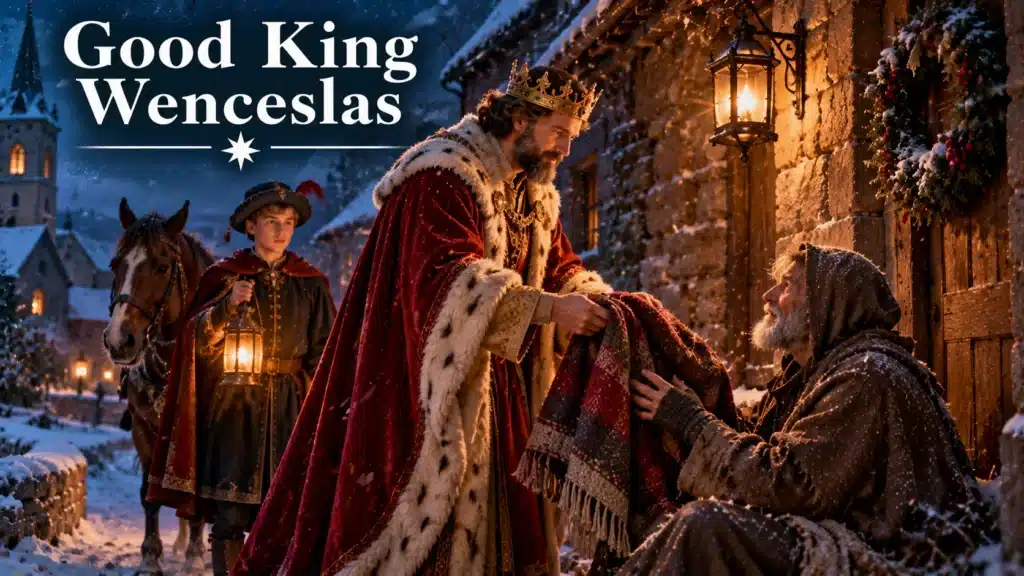
Good King Wenceslas looked out
On the feast of Stephen
When the snow lay round about
Deep and crisp and even
Brightly shone the moon that night
Though the frost was cruel
When a poor man came in sight
Gath’ring winter fuel
‘Hither, page, and stand by me
If thou know’st it, telling
Yonder peasant, who is he?
Where and what his dwelling?
Sire, he lives a good league hence
Underneath the mountain
Right against the forest fence
By Saint Agnes’ fountain
Bring me food and bring me wine
Bring me pine logs hither
Thou and I will see him dine
When we bear them thither
Page and monarch forth they went
Forth they went together
Through the cold wind’s wild lament
And the bitter weather
Sire, the night is darker now
And the wind blows stronger
Fails my heart, I know not how
I can go no longer
Mark my footsteps, my good page
Tread thou in them boldly
Thou shalt find the winter’s rage
Freeze thy blood less coldly
In his master’s steps he trod
Where the snow lay dinted
Heat was in the very sod
Which the Saint had printed
Therefore, Christian men, be sure
Wealth or rank possessing
Ye who now will bless the poor
Shall yourselves find blessing
Hør sangen
Hør sangen

Om julesangen Good King Wenceslas
Kongen i sangen har levet. Wenceslas var hertug Václav I af Bøhmen, der regerede i 900-tallet og blev myrdet af sin egen bror omkring år 935. Han fik først kongetitlen posthumt og blev senere Tjekkiets skytshelgen. Fortællingen om, at han gik ud i frosten for at bringe mad og brænde til en fattig mand, og at hans tjener kunne varme sine fødder i kongens fodspor, er en legende, ikke historie.
John Mason Neale skrev den engelske tekst i 1853. Handlingen foregår ikke juleaften, men “on the feast of Stephen” – anden juledag, den 26. december. Melodien lånte Neale fra en helt anden årstid: den stammer fra en middelalderlig forårssang, Tempus adest floridum, som han fandt i den finske samling Piae Cantiones fra 1582. Netop det greb har fået kritikere til at rynke på næsen lige siden, men sangen har overlevet dem alle og er fast inventar i engelske juletraditioner.