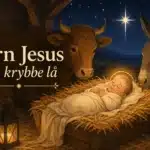

Once in royal David’s city
Stood a lowly cattle shed,
Where a mother laid her baby
In a manger for His bed;
Mary was that mother mild,
Jesus Christ her little child.
He came down to earth from heaven,
Who is God and Lord of all,
And His shelter was a stable,
And His cradle was a stall;
With the poor, and mean,
and lowly,
Lived on earth our Saviour holy.
And through all His
wondrous childhood
He would honour and obey,
Love and watch the lowly Maiden
In whose gentle arms He lay;
Christian children all must be
Mild, obedient, good as He.
For He is our childhood’s pattern;
Day by day, like us, He grew;
He was little, weak, and helpless,
Tears and smiles, like us He knew;
And He cares when we are sad,
And he shares when we are glad.
And our eyes at last shall see Him,
Through His own redeeming love;
For that Child so dear and gentle,
Is our Lord in heaven above:
And He leads His children on,
To the place where He is gone.
Not in that poor lowly stable,
With the oxen standing by,
We shall see Him; but in heaven,
Set at God’s right hand on high;
Where like stars His children crowned
All in white shall wait around.